

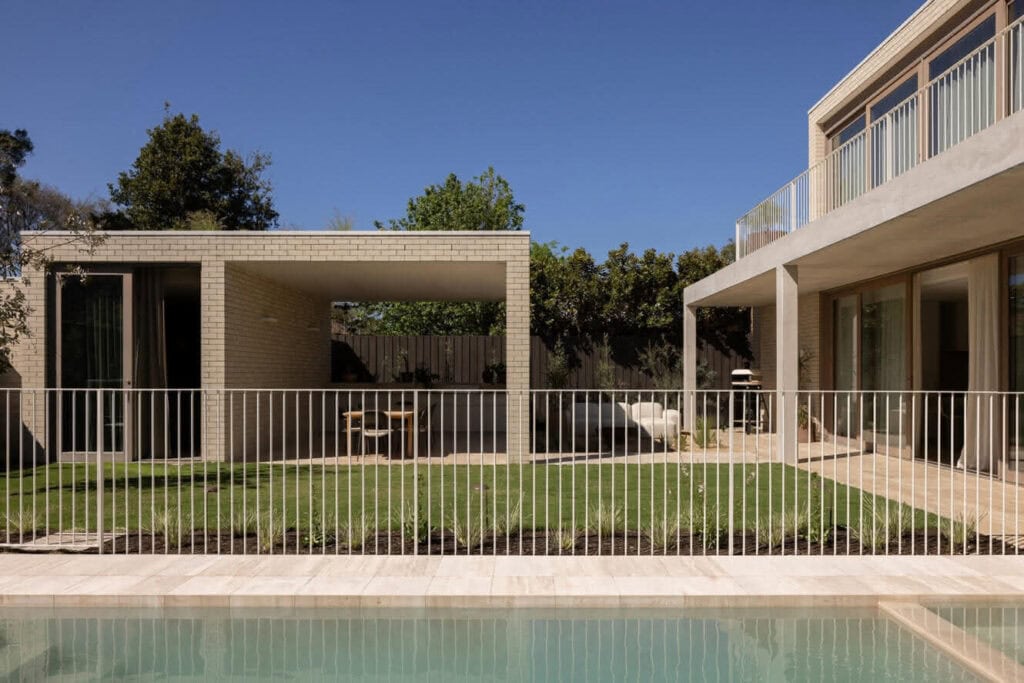
A façade that behaves like an environmental filter
Northside is a study in calm architecture: long planes, soft light, and a landscape that feels less
like “garden” and more like microclimate. Its ease is engineered—through proportion,
orientation, and a façade that treats the sun as a force to shape. evaya external shading sits at
the boundary between climate and building envelope, intercepting solar energy before it
reaches the glass, reducing heat gain and glare, and preserving a generous, usable daylight
condition.
Daylight without glare: science in service of atmosphere
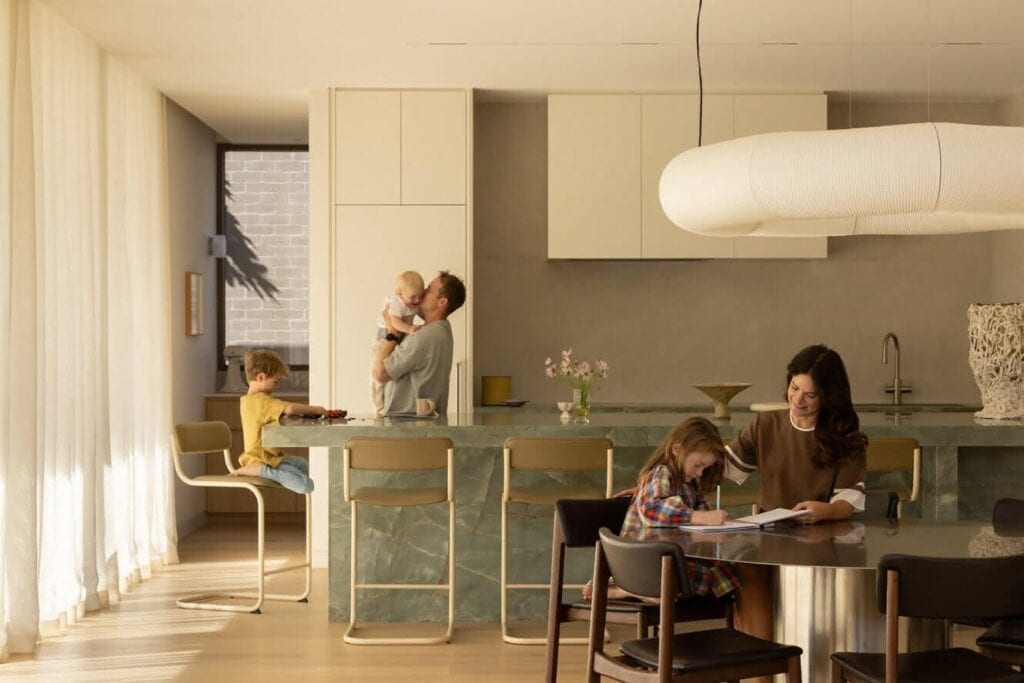
The interiors demonstrate what designers want in practice: rooms that feel sunlit, not sun-
struck. Daylight arrives as an even wash—warm, directional, and controlled—so spaces remain
comfortable for living, reading, and screens. evaya is focused on improving the quality of light,
keeping rooms bright while managing glare.
Heat reduction where it matters most
North and west façades ask the most of glazing in Australian conditions—higher summer loads
and low-angle afternoon sun. evaya external shading is conceived for these realities: external
solar interception to support thermal comfort without compromising openness and connection.
Privacy as a gradient (not a switch)
Good residential design rarely wants a façade that is either fully open or fully closed. It wants
choice—privacy when needed, outlook when desired, and soft control in between. evaya
supports this in-between state: screening when required, while still allowing daylight and a
sense of connection to outdoors.
Integration that reads as architecture
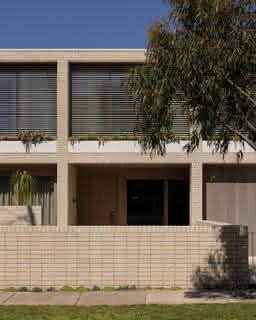
The best performance elements disappear into the language of the building. When detailing is
aligned with structure, reveals and junctions, external shading becomes architecture—resolved
cleanly and operating reliably in real conditions.

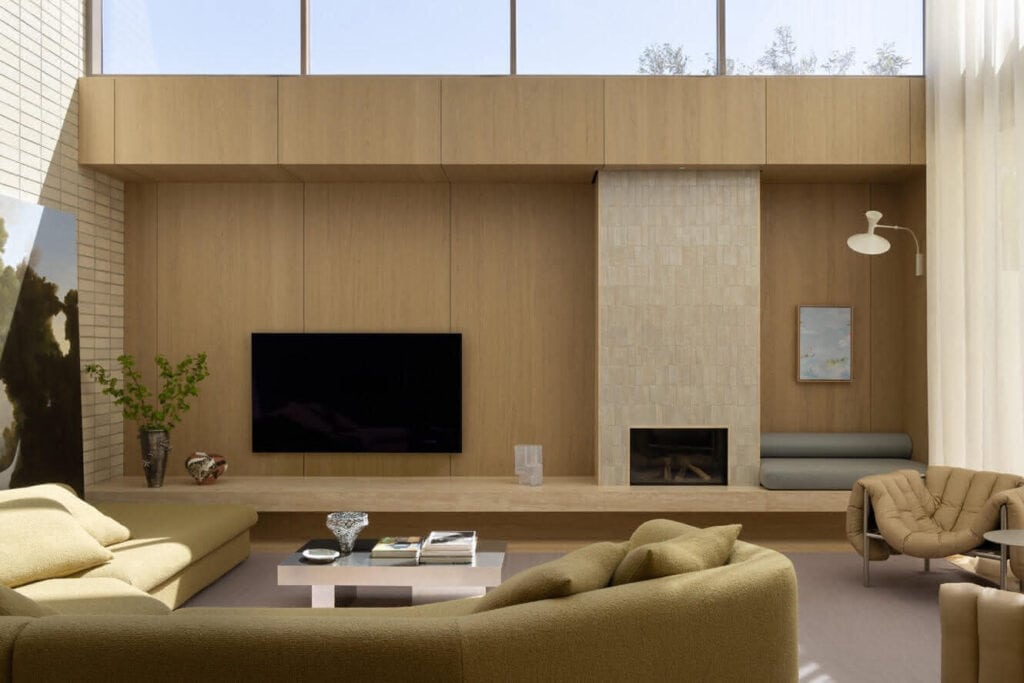
Photography: Timothy Kaye (timothykaye.com)