

Roberts Residence Case Study
Heritage restored, modernity revealed — a Victorian cottage reborn as a resort-style sanctuary.
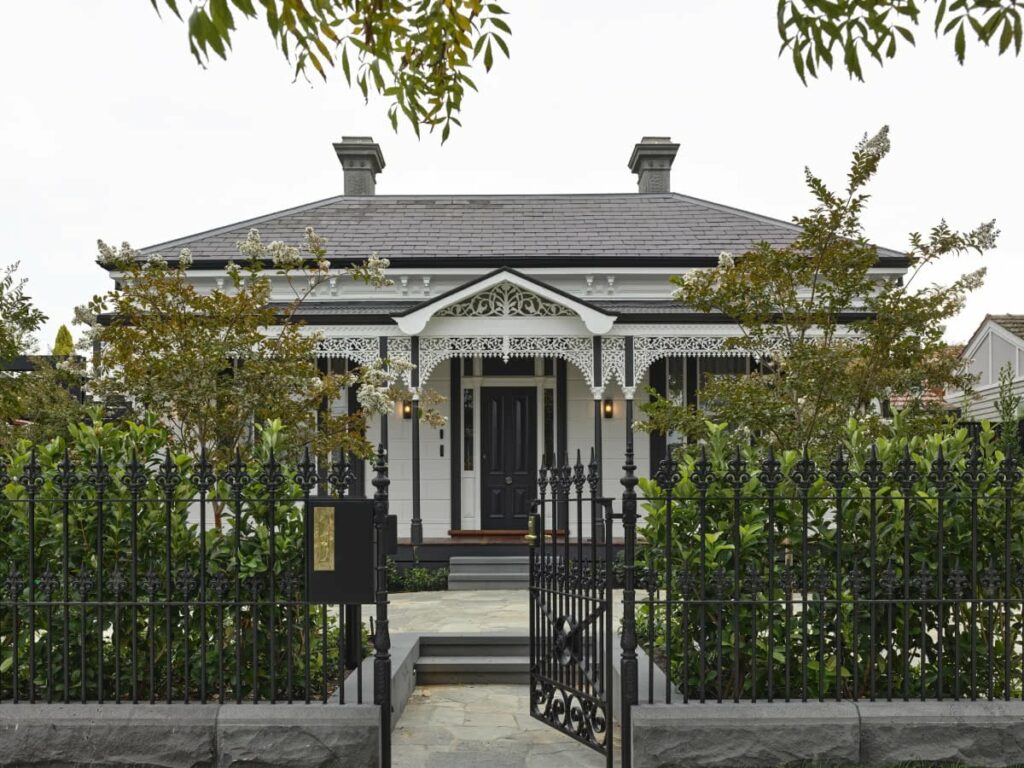
Built by Agushi and designed by the late David Watson, Roberts stands as a testament to David’s enduring legacy of stunning architectural homes. With interiors by Travis Walton Architecture and landscape design by Jack Merlo, the home balances the delicate heritage details of the street facade with the robust, resort-style luxury of the modern extension at the rear.
The Heritage Front
From the street, the home presents as a pristine piece of Melbourne’s architectural history. The Victorian weatherboard facade has been restored to exacting standards — ornate iron lacework, a classic black entry door, and a bluestone path framed by lush, considered planting by Jack Merlo Design. It is a facade that commands quiet respect.
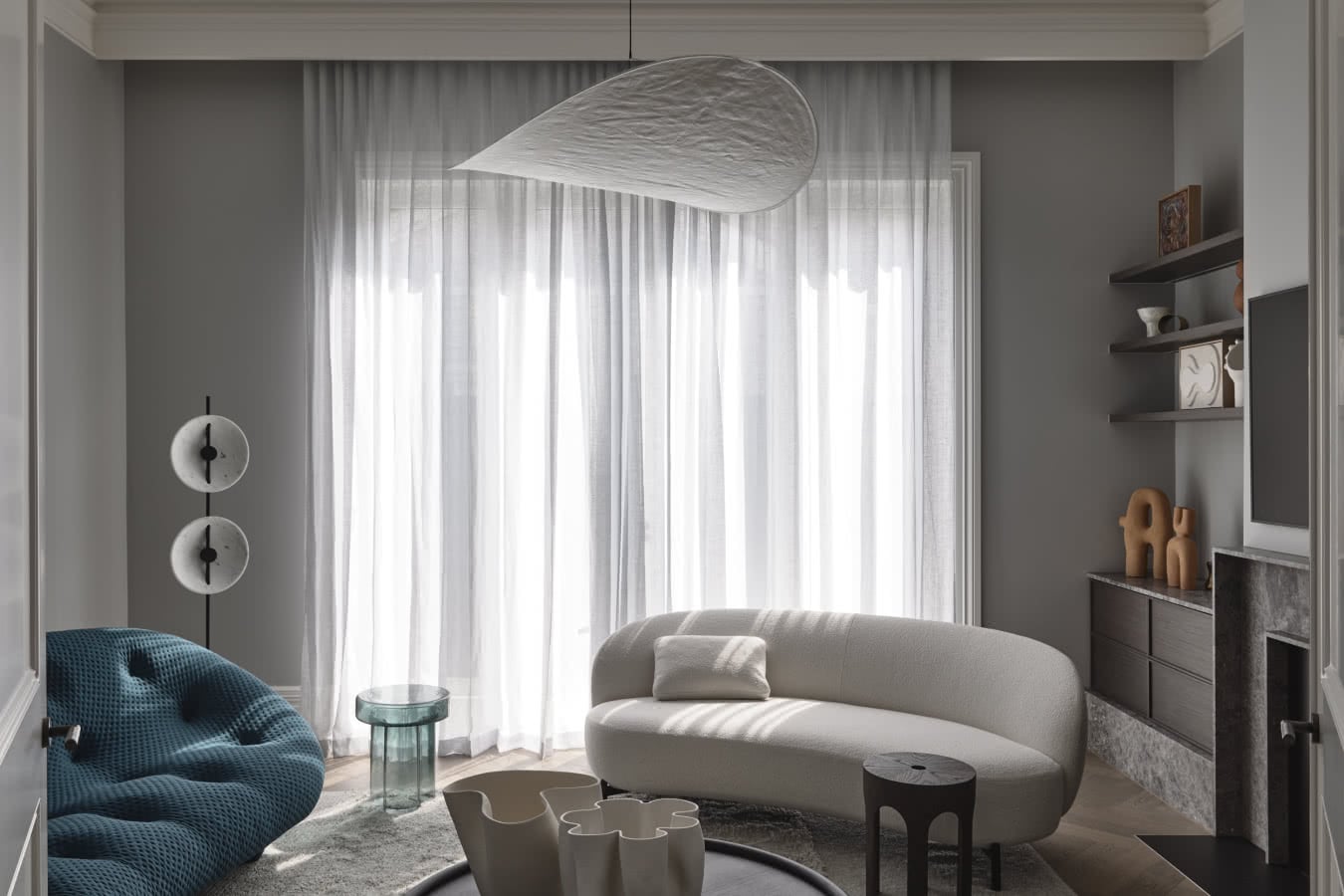
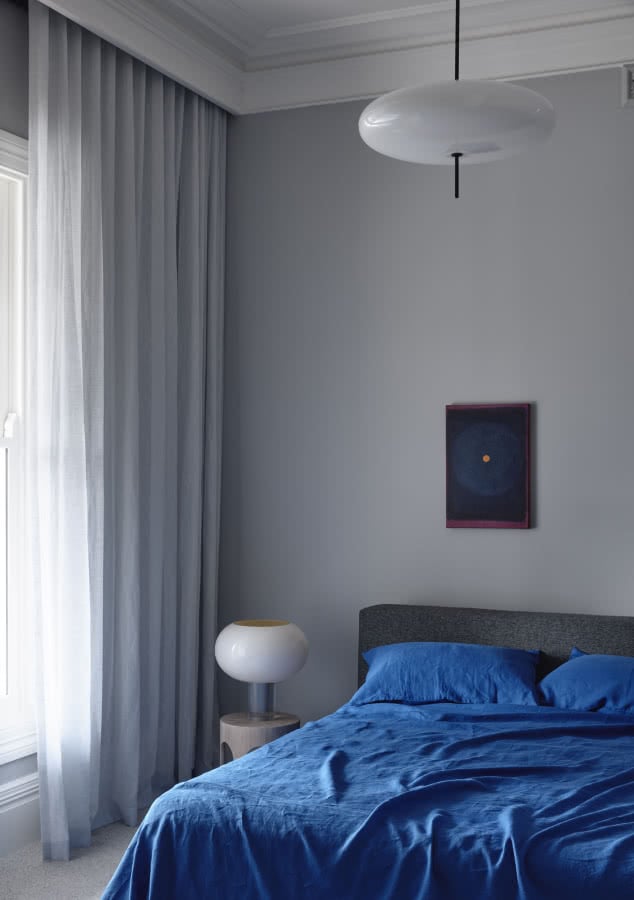
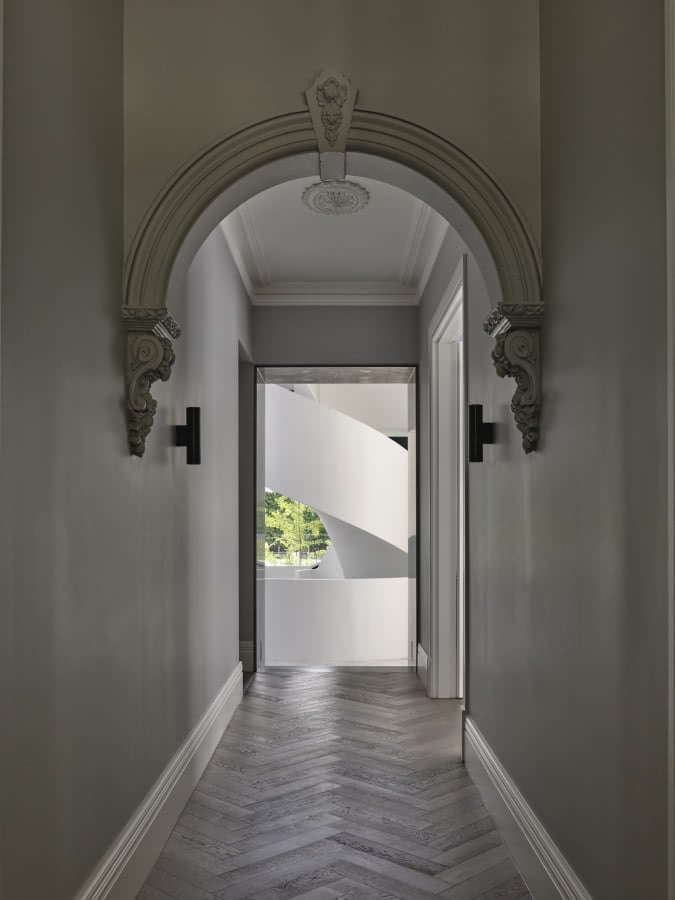
Inside the original section of the home, the heritage proportions have been respected but entirely reimagined by Travis Walton Architecture. Soaring ceilings and classic detailing provide a graceful framework for contemporary living. Sheer drapery filters the light, sculptural pendant lights anchor the rooms, and curated furnishings — including a curved bouclé sofa and a striking teal armchair — create an atmosphere of quiet, assured sophistication.
The Modern Addition
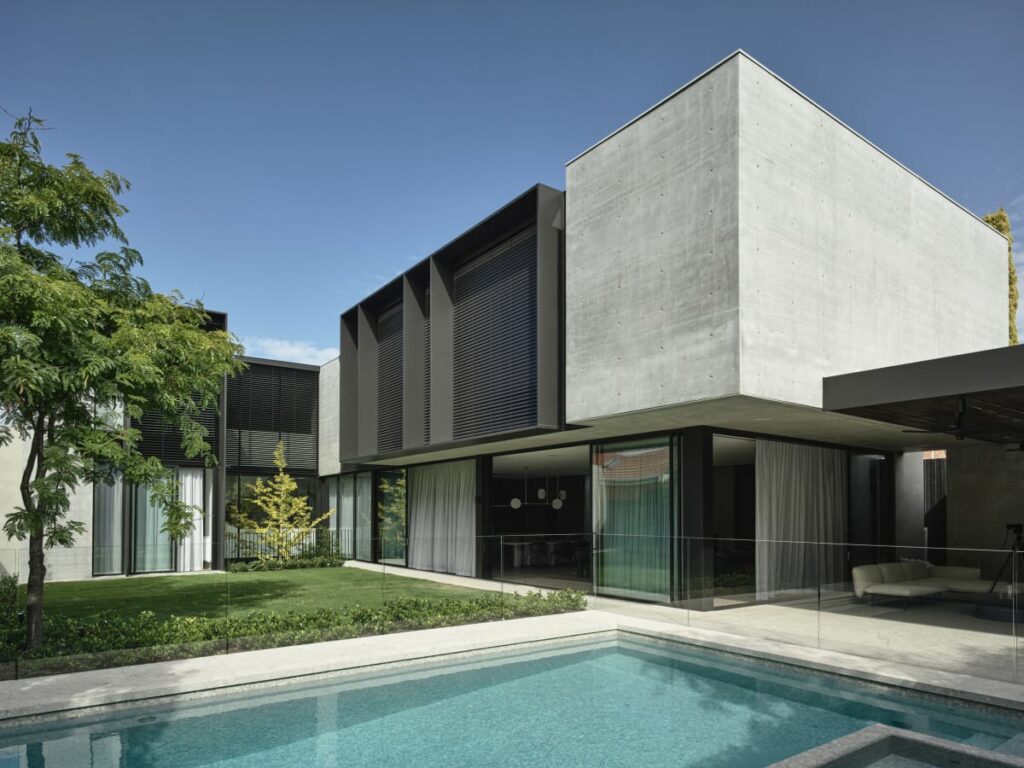
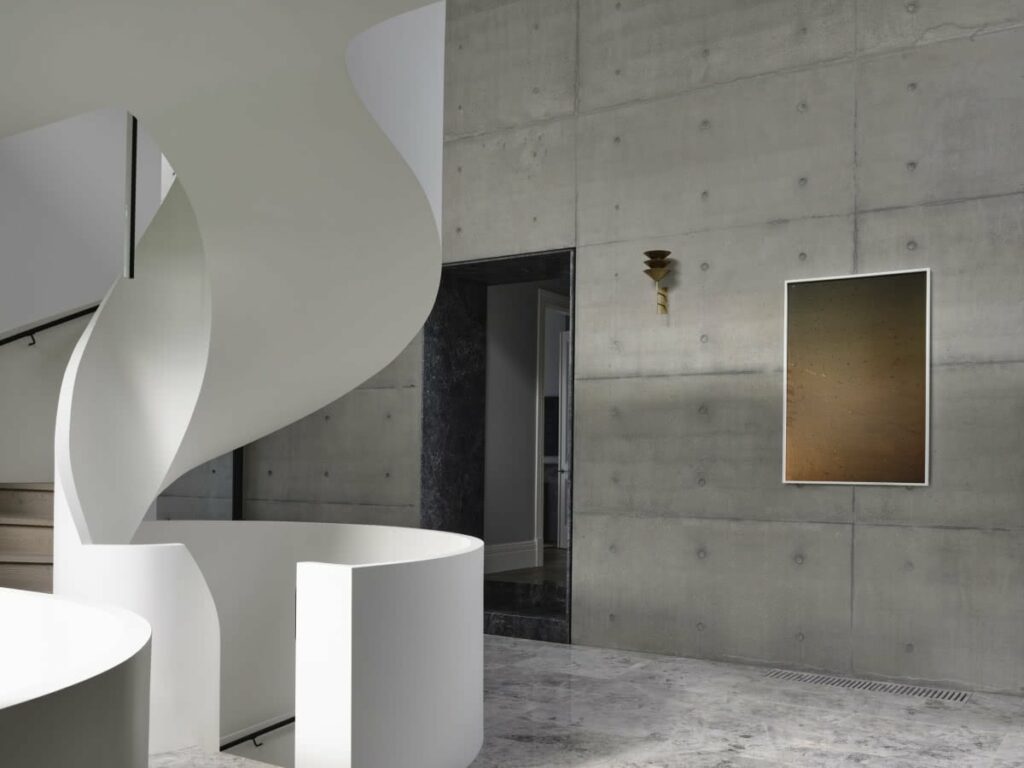
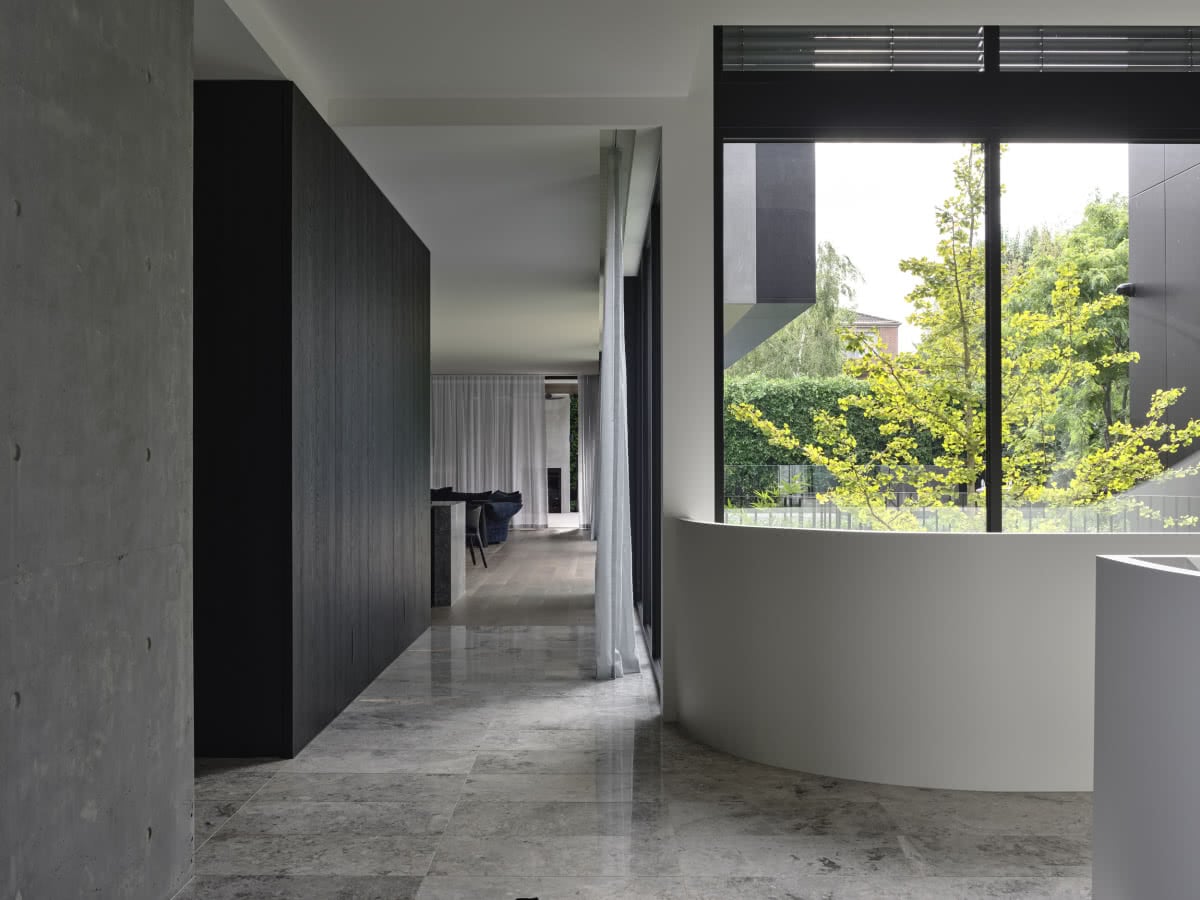
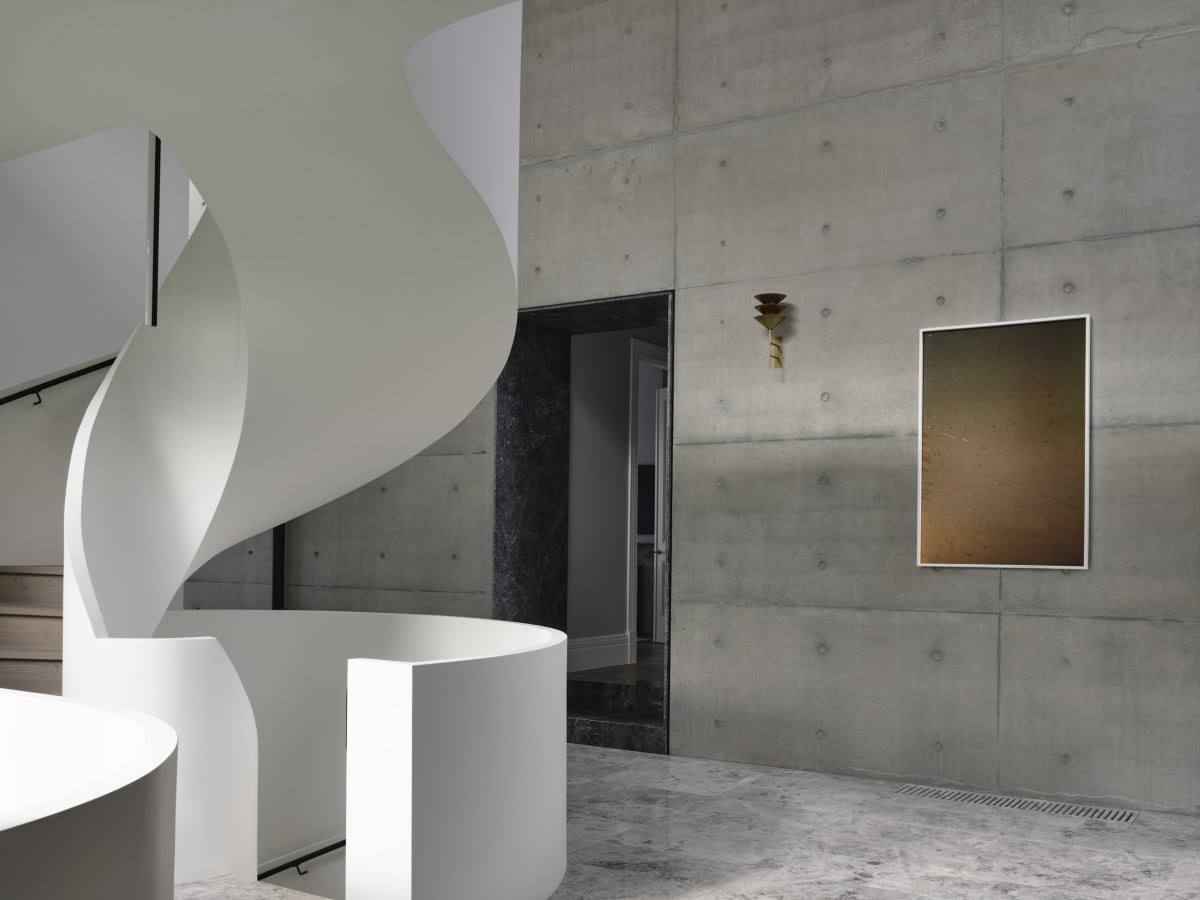
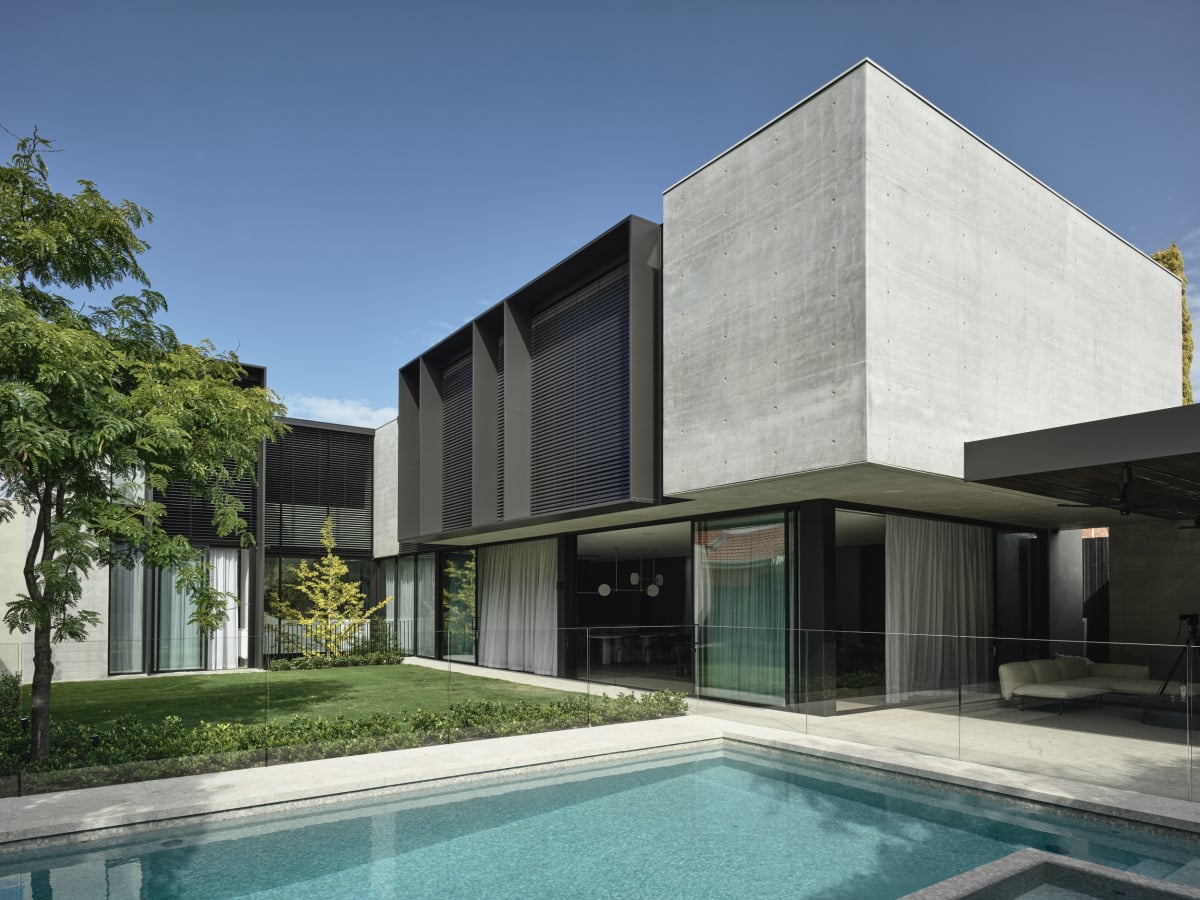
Moving through the home, the transition from the 1890s to the present day is both dramatic and seamless. The rear of the property opens into a substantial modern addition — a two-storey wing defined by its robust materiality: expanses of off-form concrete, dark timber joinery, and striking stone surfaces that anchor every room.
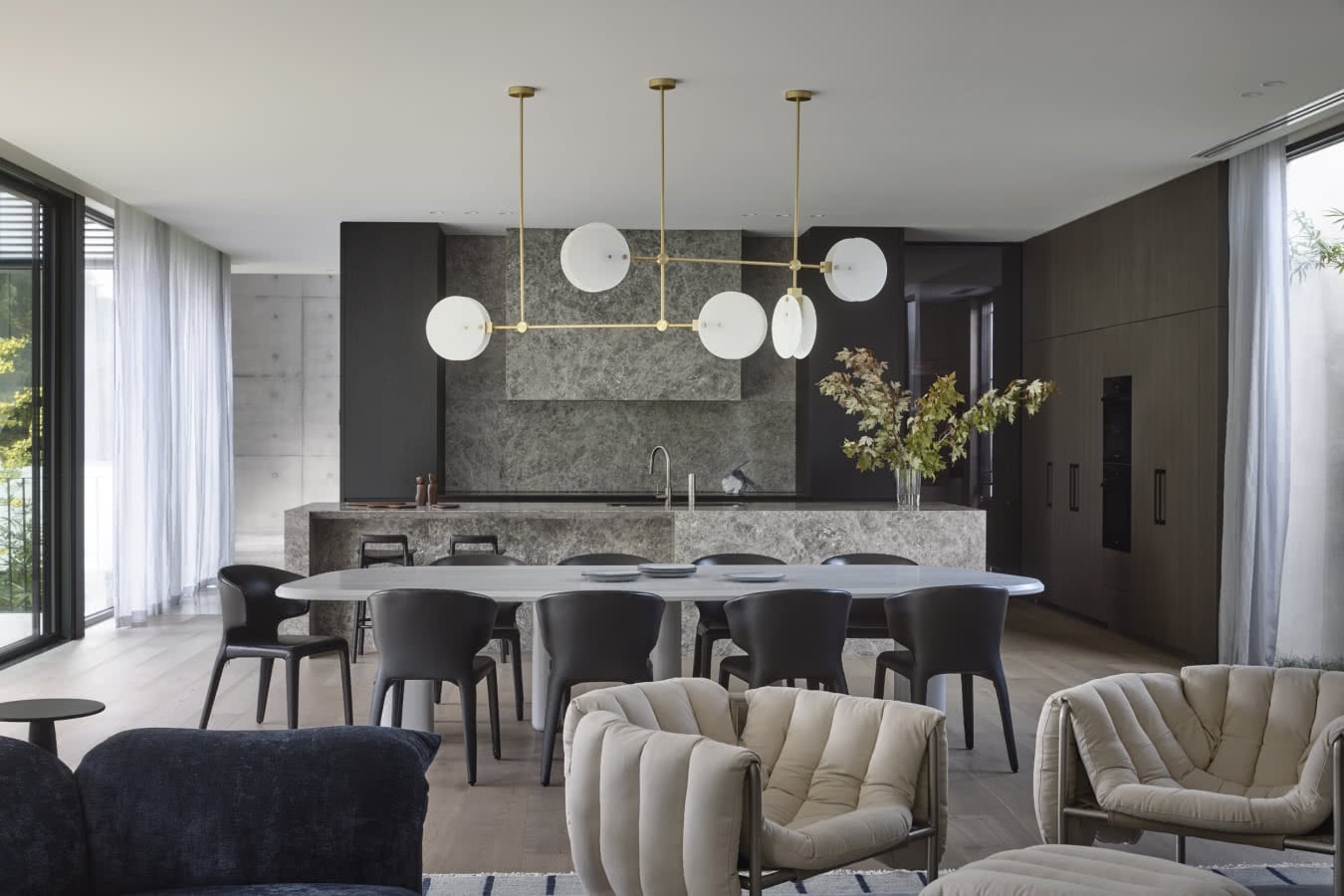
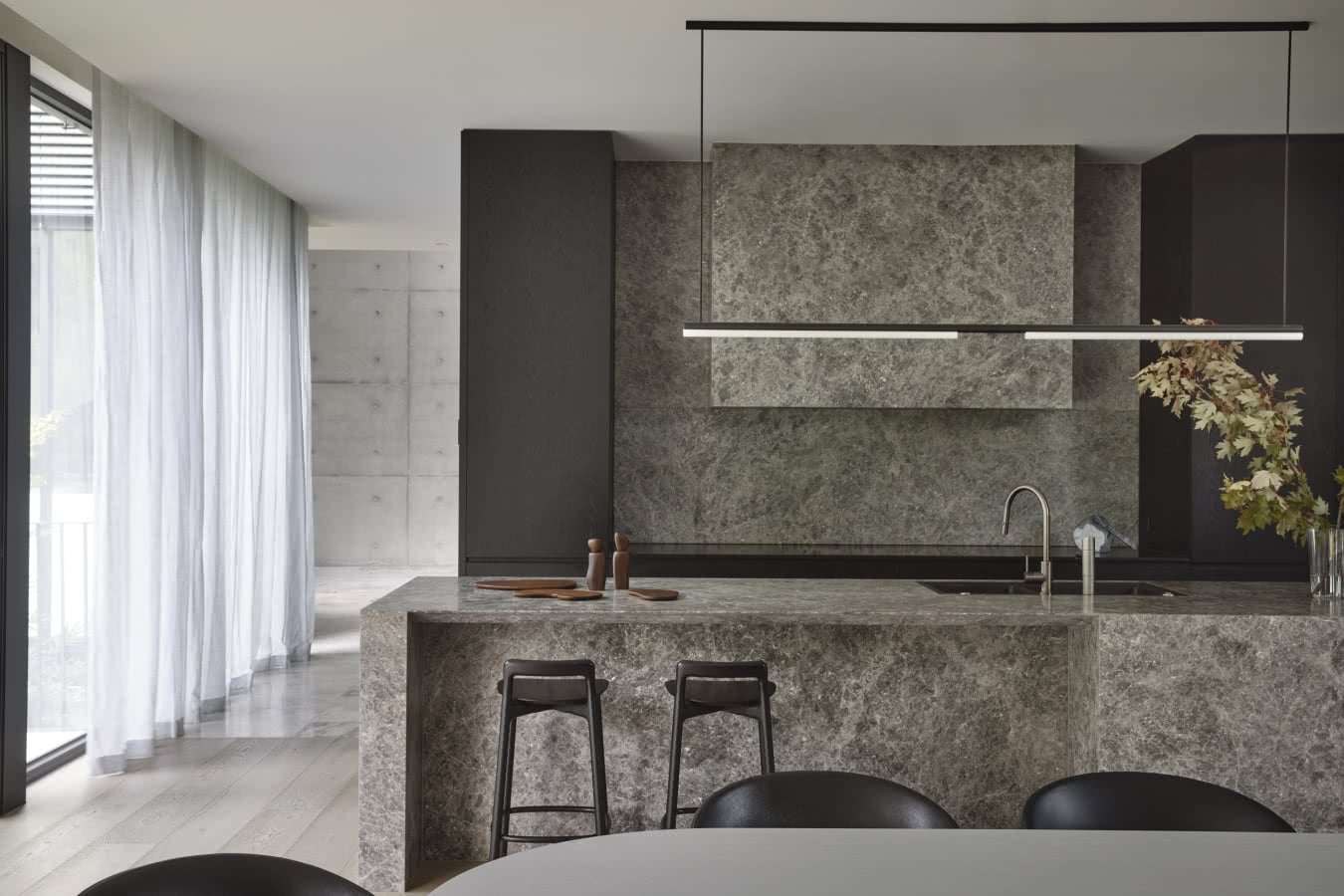
The kitchen and living zones are conceived as a continuous, open-plan space that prioritises connection and flow. A monumental stone island bench — clad entirely in a richly veined grey stone — anchors the kitchen, while floor-to-ceiling glazing dissolves the boundary between the interior and the Jack Merlo- designed gardens beyond. Brass pendant lights hang above the dining table, their warm glow softening the cool precision of the stone and concrete.
Light, Shadow, and the ev80
Crucial to the environmental performance and aesthetic character of the modern addition is the integration of Evaya ev80 external venetian blinds. Installed on the upper level and key western elevations, the blinds provide essential solar control for the expansive glazing — intercepting the sun’s heat before it reaches the glass, reducing cooling loads, and protecting the refined interior finishes.
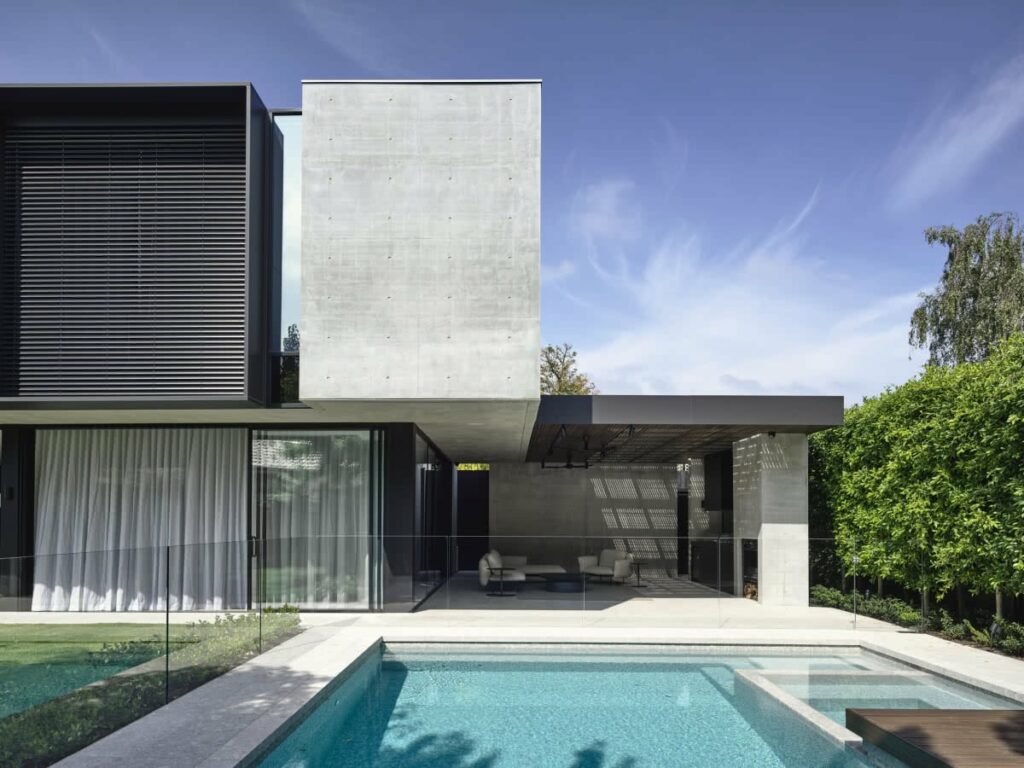
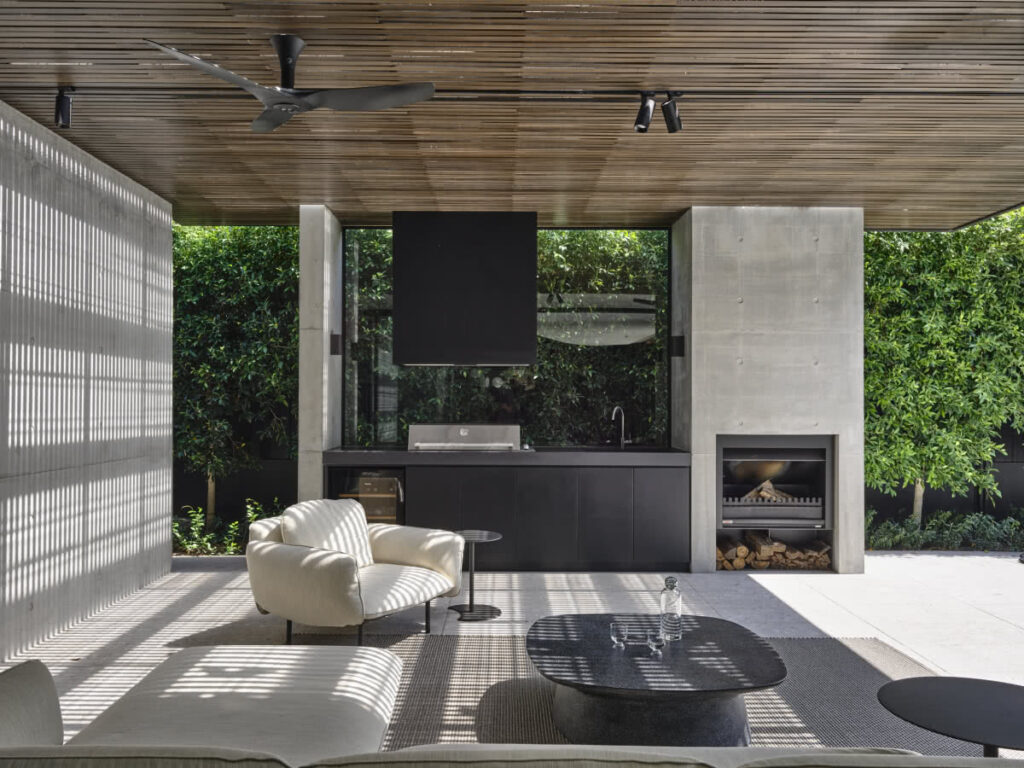
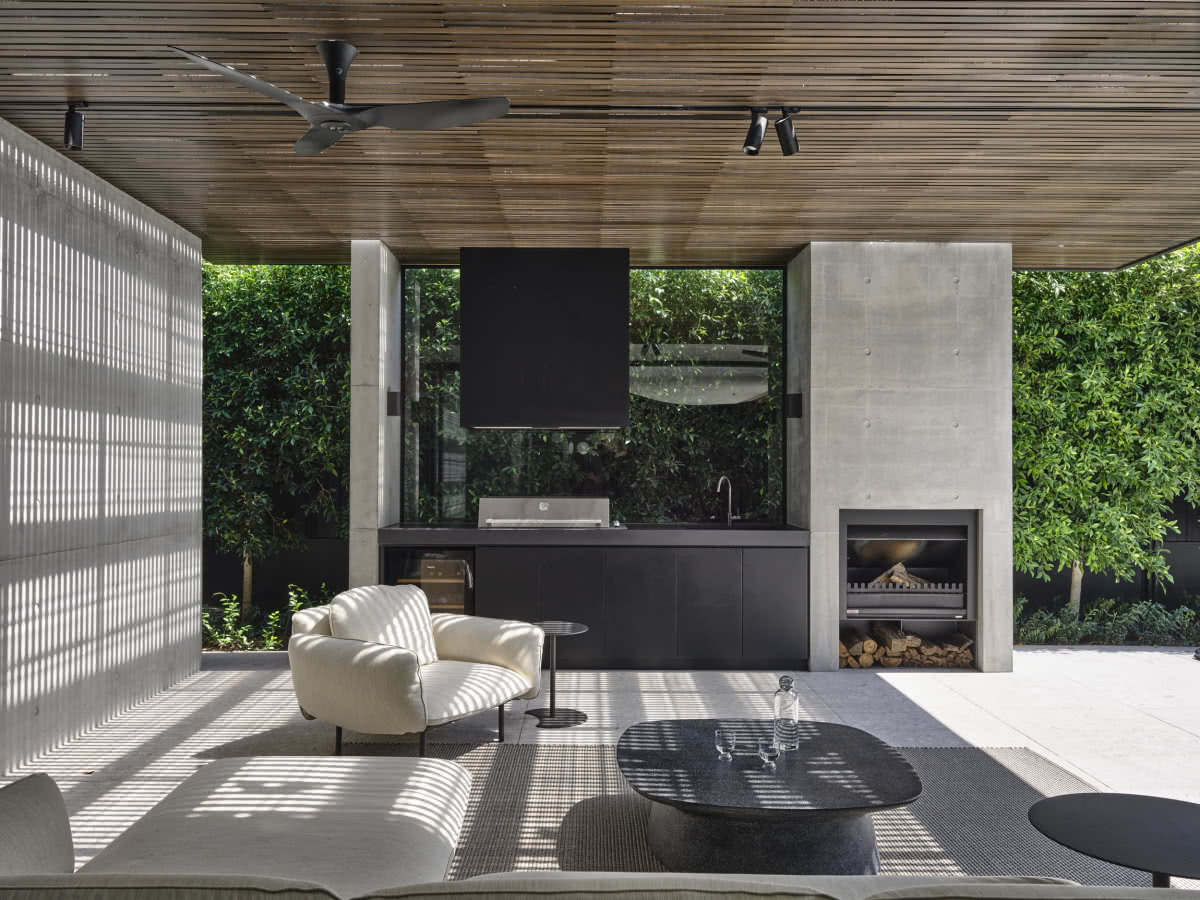
The interplay of light and shadow is particularly striking in the alfresco area, where the lowered ev80 blinds cast precise, linear shadow patterns across the raw concrete walls and paved floors below. This dynamic texture shifts and moves throughout the day, animating the outdoor room with a quality of light that is both functional and deeply beautiful. When raised, the blinds disappear entirely — allowing the home to embrace the full warmth of the winter sun and maintaining uninterrupted views across the meticulously landscaped grounds.
The ev80 Effect
How the Evaya ev80 transforms light into architecture
The lowered ev80 blinds cast precise linear shadow patterns across the concrete and paving, animating the outdoor room throughout the day.
The lowered ev80 blinds cast precise linear shadow patterns across the concrete and paving, animating the outdoor room throughout the day. External blinds intercept solar radiation before it reaches the glass — reducing cooling loads by up to 75% and protecting interior finishes from UV degradation.
Resort-Style Living
The rear of the property is designed as a private, north-facing sanctuary. A luxurious alfresco area — complete with an outdoor kitchen, an open fireplace, and a timber-lined ceiling — overlooks the pool and Jack Merlo-designed gardens. The space is fully equipped for year-round entertaining, with the concrete columns and frameless glazing creating a room that is simultaneously sheltered and open to the sky.
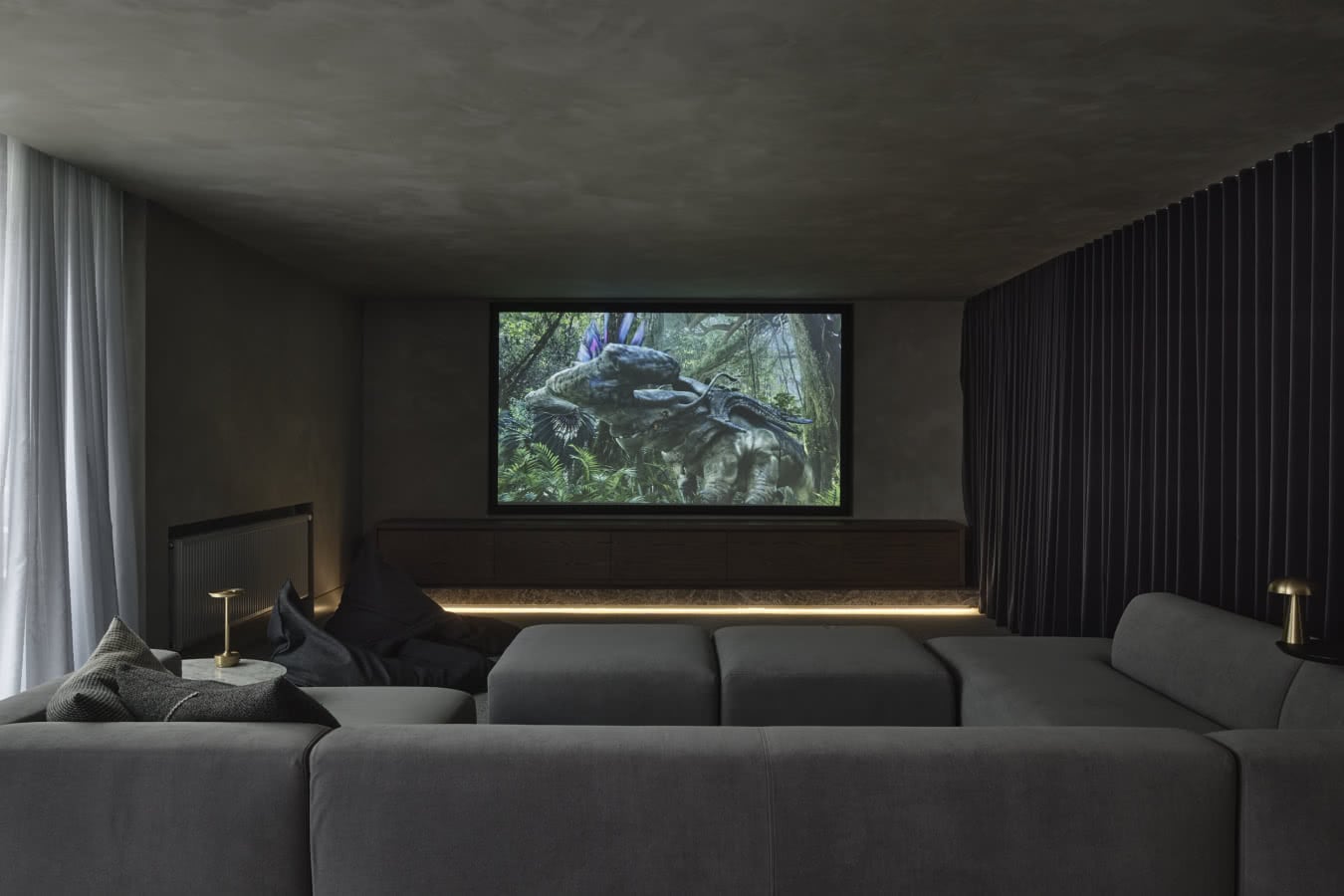
Five bedrooms and three living zones are distributed across the home, with the basement providing additional space for a four-car garage and further amenity. The result is a home of extraordinary scale and completeness — one that honours its Victorian origins while embracing the full ambition of contemporary living.
Project Credits
- Project:Roberts Residence Case Study
- Location:Melbourne, VIC
- Type:Residential — Heritage Restoration & Addition
- House Size:960 m²
- Land Size:993 m²
- Architecture:David Watson
- Interiors:Travis Walton Architecture
- Landscape:Jack Merlo Design
- Builder:Agushi
- External Shading:Evaya ev80
- Photography:Derek Swalwell